Showing posts with label Research. Show all posts

Tuesday, February 24, 2026

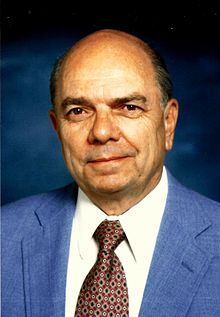
For Adam (Adam Horvath, In Memoriam)


   1. I Woke up Yesterday to Find You Gone


There is a hole in the world where you have always been.

Your wry, lopsided smile and all your Adam-ness

Now missing, must live inside us, as memory.


You always stood a bit outside.

You didn’t join the latest consensus,

You didn’t just march to a different drummer,

You invented a new kind of drum.


You took an inventory of Bordin’s common sense

Notion of therapeutic relationship,

And made a simple measure of Working Alliance

Into a world-standard, used to this day.


2. Grandchild of the Holocaust


You always walked just outside the boundary,

Making your own way.

Last summer we spent several hours

Investigating the Krakow ghetto,

Retracing the steps that led to the Horror

From which your father so narrowly escaped.

Without this you would not even have existed,

The world poorer for your absence.


But when we said goodbye, I never imagined

I’d never see you again.

Even now I still owe you one last book chapter,

Sitting in my computer half-revised,

Waiting for me to respond to your remaining queries.


Although you are gone I still have

Answers to you to frame,

Not wanting to disappoint your high hopes

That I might help you unpack moments of impasse

in our shared labor of psychotherapy.


3. Oh, Adam, Adam, Adam


You always did what you felt was right,

Even when it -- occasionally –

Drove some of us to distraction.


But I was always glad to see you, knowing this:

Here is someone who truly understands

This community of those

Who seek the secrets of psychotherapy,

Not forgetting for a moment

How hard yet joyful this work is.


In these final years, this took you

Away from numbers and even categories,

Ever closer to the raw talk itself,

On which the whole enterprise is built.


4. Your Death Unleashes a Flood of Memories


You probably thought you were marginal,

A footnote, but it turns out that

You were always at the center

Of the SPR-sphere,

The web of interconnection that

Links all psychotherapy researchers.


Many of us are now wondering:

When did I last see Adam?

What did we say? Or do? Or eat?


The threads glow like nerve fibers

Trying to hold you in our minds

Before the traces go dark,

Before we go dark.


But you’re still there;

The memories of you still live:

Our shared laughter,

Echoing in the theater of our minds;

Your kindness, passed along

And multiplied in many acts of caring;

Your stubborn persistence, refusing to let us

Forget you and what is important in this work:

As if that was possible!


                                                -Robert Elliott; 20 – 23 Feb, Lodi, California


Friday, September 19, 2025

New Publication on Empathic Conjectures in Journal of Marital & Family Therapy


 Just published online in open access: A new study, "Empathic Conjectures in Emotionally Focused Couple Therapy (EFCT): A Process Microanalytic Study," by Hamed Fatahian-Tehran, Simran Chatha & me.  In the Journal of Marital & Family Therapy. 

This was a fun project, initiated when Hamed and Simran each separately approached me about doing a research project on EFT. What transpired was an analysis of 12 sessions of Emotionally-Focused Couples Therapy available for training purposes. We decided to study empathic conjectures (therapist responses that guess about previously unspoken client experiences), focusing on characteristics that define empathic conjectures and identifying different types of empathic conjectures. This basically a new type of therapy process research, which we decided to call "Process Microanalysis." I'm hoping that others will take up this approach, replicating and extending our results and applying it to other types of EFT therapist response.

 Fatahian-Tehran, H.M., Chatha, S. and Elliott, R. (2025), Empathic Conjectures in Emotionally Focused Couple Therapy (EFCT): A Process Microanalytic Study. Journal of Marital and Family Therapy, 51: e70075. https://doi.org/10.1111/jmft.70075


Sunday, December 01, 2024

Interview with Me on the Experiential Psychotherapy Training YouTube Channel

Sam Robinson interviewed me a couple of weeks ago for the "Experiential Practitioners" series for the Experiential Psychotherapy Institute (available on the Experiential Psychotherapy Training channel on YouTube). It was a fun, free-flowing interview and the hour just seemed to fly by. We covered a range of topics including basic EFT theory and the challenges of learning EFT, but most importantly the central role of empathy and presence in EFT and psychotherapy practice more generally.

This interview has just been released; you can find it on YouTube at: https://www.youtube.com/watch?v=iQCxaM8spKc  . For more from the Experiential Psychotherapy Institute, check out their website: https://www.experiential-psychotherapies.com/


Tuesday, November 26, 2024

Larry Beutler Passes


[Note: I heard today on the listserver of the Society for Psychotherapy Research that Larry E. Beutler died a couple of days ago.  I'm posting this little piece to mark his passing.]


This news reaches me on a gray morning,

Losing yet another of the tall trees

Of psychotherapy research.


For decades, Larry was deeply rooted in the heart of SPR.

He believed in and searched long and hard

For the key to psychotherapeutic change

In a set of principles that would unlock

the gnarly intersectionality of client presenting problems,

Personality and therapeutic approach.

He was unflagging in his pursuit

Of the seemingly impossible,

Unearthing enticing possibilities,

Paths that we still trace today.


But following the sadness and shock,

I find a smile in me as I remember Larry,

Near-constant presence in SPR,

Enthusing over his latest findings,

Loving psychotherapy research with all of his heart.


Not many of us now remember how in 2002

He took out a second mortgage on his house

To save the Santa Barbara SPR conference

From financial ruin.  But that was Larry.


Perhaps you will join me today

To raise a glass and to remember

Larry’s cheerful energy, his generosity,

And passion for sciencing psychotherapy,

Along with his cowboy boots, his leprechaun charm,

And wide, welcoming smile.


========

 For more about Larry Beutler (1941- 2024), see the obituary produced by his family at:  https://www.dropbox.com/scl/fi/8xpg0tluei2t01zhodbou/Larry-Edward-Beutler-Obit.docx?rlkey=rfsd756o0xkqyy7z8kul4vs3y&dl=0 


In addition, an extended biography can be found in:

Machado, P. P. P., Fernández-Álvarez, H., & Clarkin, J. F. (2010). Larry E. Beutler: A matter of principles. In L. G. Castonguay, J. C. Muran, L. Angus, J. A. Hayes, N. Ladany, & T. Anderson (Eds.), Bringing psychotherapy research to life: Understanding change through the work of leading clinical researchers (pp. 319–328). American Psychological Association. https://doi.org/10.1037/12137-027

Sunday, February 18, 2024

Vale Allen Bergin: Personal Reflections

Allen Bergin, one of the founders of the scientific field of psychotherapy research, died a couple of days ago at the age of 89. In the late 1960’s he and Hans Strupp got a grant to travel around the United States interviewing prominent psychotherapy researchers about where the field should go. The result was the book Changing Frontiers in the Science of Psychotherapy (1972), which I devoured as a grad student when I was at UCLA. I still remember the breathless excitement of their commentary on the process. It was one of the things that inspired me to become a psychotherapy researcher.


Allen had done a post-doc in the early 1960’s with Carl Rogers working on the famous Wisconsin Project, which had applied client-centered therapy (later relabelled as person-centered therapy) to work with clients with psychotic processes. With Sol Garfield, he began editing the Handbook of Psychotherapy and Behavior Change, whose first edition was published in 1971, and which was – and still remains – the standard reference for psychotherapy research.  In the early 1990’s Allen and Sol asked Les Greenberg to do a review of research on humanistic psychotherapies for the fourth edition of the Handbook.  Humanistic psychotherapies had not been covered since the first edition, so this was a big step, and a potentially an important moment for this branch of psychotherapy.  It was also the origin of the Humanistic-Experiential Psychotherapy (HEP) meta-analysis project, still continuing 30 years later. We set to work meta-analyzing pre-post effect sizes for all 37 HEP outcome studies we were able to find. (At that time, we were opposed to comparative outcome research.) Somewhat anxiously, we submitted the draft to Allen and Sol.  They knocked it back, insisting that we analyze the controlled (vs. no-treatment controls) and comparative (vs. other treatments) outcome studies.  We swallowed hard, held our noses, and analyzed the controlled and comparative outcome effects, producing the (for us) startling result of large controlled effects and null (d = 0) comparative effects.  We had obtained a no difference, “dodo bird” effect.  We submitted the revision to Allen and Sol, who knocked it back again, complaining that we had pooled comparative effects involving both CBT and psychodynamic therapies; how did we know that CBT wasn’t more effective that HEPs?  With great trepidation, we ran the comparison between CBT and HEPs; we found CBT to be slightly but nonsignificantly more effective than person-centered, but also tantalizing indications that EFT might more effective than CBT. At that point, much to our relief, Allen and Sol accepted the chapter. 


Years later Allen was visiting Toledo, where his son was teaching in the School of Education at the University of Toledo, and he and I arranged to meet up.  He told me that Sol had wanted to reject our humanistic therapy review chapter from the Handbook; he had insisted on keeping it in the book. Given the precarious state of these therapies in the early 1990’s, I think that the history of the humanistic-experiential therapies would be quite different today if Allen had not come our defense at that point. We owe him a debt of gratitude.


As another testament to his integrity, I want to point to his outspoken advocacy of bringing scientific attention to the important role of religious faith and involvement in religious communities as factors supporting mental health and psychological well-being, published in his ground-breaking paper, “Psychotherapy and religious values.,” in the Journal of Consulting and Clinical Psychology (1980). I remember him presenting a version of this paper at a conference of the Society for Psychotherapy Research around that time. He must have  known that it was not a popular topic with psychotherapy researchers at that point in history, and would possibly lower the estimation that many of his fellow researchers had of him. Nevertheless, it was a testament to his scientific integrity and his religious faith that he went ahead to make his case regardless of the consequences.  As another person of faith, I personally felt validated and inspired by his attempt to combine the spiritual with the scientific. 


Over the past 20 years, various folks in the Society for Psychotherapy Research have reached out to Allen, encouraging him to come to meetings; however, the fact is that he was happy with his mission work (he was a prominent figure in the Church of the Latter Day Saints) and with his family.  Therefore, it was heartening to read the moving account by Michael Barkham (echoed by Wolfgang Lutz and Louis Castonguay) of his recent involvement in the 7th edition of the Handbook (published in 2021). In order to write the preface for it, Michael reports that Allen carefully read and took detailed notes on all 800 pages.


Right now in my imagination I’m picturing him reading the latest version of the HEP chapter in the book he and Sol Garfield founded, pleased and smiling at the nearly 300 outcome studies of HEPs now included in our reviews, feeling glad that he put his faith in us 30 years ago, just when we needed that validation.  Thank you, Allen! Your integrity and faith live on in us.  You are an important piece in the history of psychotherapy research, and one of my personal validating elders (or “angels” or “saints” if you prefer).


For more on Allen Bergin and his life:


https://en.wikipedia.org/wiki/Allen_Bergin


Lambert, M. J., Gurman, A. S., & Richards, P. S. (2010). Allen E. Bergin: Consummate scholar and charter member of the Society for Psychotherapy Research. In L. G. Castonguay, J. C. Muran, L. Angus, J. A. Hayes, N. Ladany, & T. Anderson (Eds.), Bringing psychotherapy research to life: Understanding change through the work of leading clinical researchers (pp. 101–111). American Psychological Association. https://doi.org/10.1037/12137-009


Monday, December 23, 2019

Remembering Leonard M. Horowitz, 1937 – 2019, Psychotherapy/Interpersonal Psychology Researcher Extraordinaire


Entry for 22 December 2019:

Len Horowitz, my friend and fellow psychotherapy researcher died on 11 November 2019, at the age of 82, in Portola Valley, California. However, my fellow psychotherapy researchers and I didn’t hear about his death until a few days ago, when George Silberschatz sent out an email on the Society for Psychotherapy Research (SPR) list.

Personal reflections.  I met Len in 1976 when as a very green grad student I attended my very first SPR conference, in San Diego.  I have this vivid memory of hanging around with him talking by some large plants in the entryway of the Hotel del Coronado. The conference was over but I delayed leaving because I fell into long and fascinating conversation with him about how the Spearman-Brown prophecy formula could be used to increase the reliability of therapy process ratings.  It seemed like magic at the time and impressed the heck out of me.  From then on he was, to quote T.S. Eliot il miglior fabbro, “the better maker”: the psychotherapy research methodologist who I, as a psychotherapy research methodologist, looked to for inspiration.  Without him it would have been years before I discovered Spearman-Brown, and it would never have occurred to me to use to cluster analysis/multidimensional scaling for my 1985 significant events taxonomy paper.  Like many of my colleagues in SPR I was an early adopter of his wonderful Inventory of Interpersonal Problems (IIP), the items for which he constructed from transcripts of intake sessions with psychotherapy clients, a lovely example of phenomenological test construction.  His case study research on the emergence of previously warded-off mental contents, with the Mount Zion Group in San Francisco, was a revelation for me when I first read it. And so on.    

Here are a few facts about Len:  Len was born 28 Feb 1937. He received his PhD in Experimental Psychology from Johns Hopkins University in 1960.  He started out in Experimental Psychology, landed a job at Stanford University right out of grad school at the age of 23 (no mean feat that, even in those days), and then later did clinical training, working with the Mount Zion Group during the 1970’s, as I mentioned above.  He was president of SPR 1992-93 and president of the Society for Interpersonal Theory and Research (which he helped found) 1999-2000. He received SPR’s Distinguished Career Award in 2010.  He wrote at least two books, including an undergrad statistics textbook (Elements of Statistics for Psychology & Education,1974), and Interpersonal Foundations of Psychopathology (2004).  He is also famous for his work with Hans Strupp and Michael Lambert on a 1990’s APA task force on creating a core battery of standardized measures for evaluating the outcome of psychotherapy (published as Measuring Patient Changes in Mood, Anxiety, and Personality Disorders: Toward a Core Battery, 1997) and for editing (with Stephen Strack), the Handbook of Interpersonal Psychology: Theory, Research, Assessment, and Therapeutic Interventions (2010).  According the Scopus, his most frequently-cited publication (Bartholomew & Horowitz, 1991) has been cited 3758 times; it is one of the key publications in the modern attachment theory literature.

Since word of his death reached the SPR list, there has been an amazing outpouring from a wide range of well-known psychotherapy researchers honouring his many contributions.  What I have found most striking about these testimonials, however, is the portrait of Len that emerges from them: Over and over again, people have written about how Len made them feel welcome from their first SPR conference, how he was gentle, approachable, humble, enthusiastic, generous, warm, creative, throughtful and thought-provoking, wise, inspiring… and brilliant. He clearly felt a calling to support early career psychotherapy researchers and in this has provided a great service to the field and an important role model for the rest of us. I think Les Greenberg summed Len up about right when he described him as an “all round mensch”.

And here is a collection of some of my favourite Len Horowitz references (others will have other suggestions):
            Horowitz, L.M., Sampson, H., Siegelman, E.Y., Wolfson, A., & Weiss, J. (1975).  On the identification of warded off mental contents.  Journal of Abnormal Psychology, 84, 545-558.
            Horowitz, L.M. (1979).  On the cognitive structure of interpersonal problems treated in psychotherapy.  Journal of Consulting and Clinical Psychology, 47, 5-15.
            Horowitz, L.M., Inouye, D., & Siegelman, E.Y. (1979).  On averaging judges' ratings to increase their correlation with an external criterion.  Journal of Consulting and Clinical Psychology, 47, 453-458.
            Horowitz, L.M., Rosenberg, S.E., Baer, B.A., Ureño, G., Villaseñor, V.S. (1988). Inventory of interpersonal problems: psychometric properties and clinical applications.  Journal of Consulting and Clinical Psychology, 56, 885-892.
            Horowitz, L.M., Rosenberg, S.E., Ureño, G., Kalehzan, B.M., & O'Halloran, P. (1989).  Psychodynamic formulation, consensual response method, and interpersonal problems.  Journal of Consulting and Clinical Psychology, 57, 599-606.
            Bartholomew, K., & Horowitz, L. M. (1991). Attachment styles among young adults: A test of a four-category model. Journal of Personality and Social Psychology, 61, 226-244.
            Horowitz, L. M., & Malle, B.F. (1993).  Fuzzy concepts in psychotherapy research.  Psychotherapy Research, 3, 131-148.

I think that an excellent way to honor Len's memory would be to go back an look at some of these wonderful papers. Just a couple of weeks ago, as part of reviewing an article submitted for publication, I was pleased to be able to recommend the 1975 study to an author. Len was truly one of a kind and certainly a major inspiration for me over the course my career as a psychotherapy researcher.

Tuesday, June 27, 2017

SPR Moments: A Suite of Small Scientific Poems

(On the occasion of the 48th Annual International Conference of the Society for Psychotherapy Research)

1. Random Intercept and Slope

Each of us came here by a different route
And each of us has a different conference,
Paths winding through the program,
Highs and lows, fast and slow,
Pauses and pulses: Who can bear it all?


 2. On the SPR Presidential Address

There is the moment of meeting, the coming together
Of the different tribes, nations and languages.
Friends and competitors reconnect as we gather
For the rituals of welcome, reflection and celebration.

Some we recognize for their accomplishments or promise,
But one of us is made to put down their mark
In an unrecognized act of sacrifice:
Perhaps a tale full of twists and turns,
A labyrinthine journey, made more coherent
Than the bits of which it’s made.   Or perhaps
A bold proposal for future research,
Charting a course to tempt or inspire the rest of us,
But running the risk of crashing on the rocks. 


The truth is, all SPR presidential addresses
Are dangerous Cretan bull-jumping rituals.
We ask those we chose to grasp the branching horns
Of our most difficult research dilemmas,
And to somersault right over them, lifting us with them,
Making them bear the peril of fatal impalement.


3. Return to the Beginning

Logo for SPR 2000 Chicago
As in nature so at SPR conferences:
Researchers of like feather like to flock together,
Congregating like cranes with others of shared plumage,
Divided by the colours of our diverse theoretical orientations
Or the Darwinian beaks of our methodological bent:
Qualitative or psychodynamic; EFT or outcome monitoring.

But something in me sometimes wants to see
What I’ve been missing, what the other birds are up to,
And I pick a panel more or less at random.
The result is also random: maybe the same old story,
Or something that I find obscure or wrong-headed.
But sometimes I hit the jackpot: A useful,
Lovely new research tool or approach,
A brilliant presenter, an old friend in the audience.

This time it was an old, lost research love:
Significant events, those rare moments
Of transformational magic when something shifts.
In a panel on Saturday morning. this transported me
Forty years to the 1977 Wisconsin meeting
And a long talk with Les that changed my direction.
Now, in 2017, I realized I’d arrived
At the perfect convergence, the auspicious moment
-->
I’d been waiting for without knowing it,
My beginning looping around
Like the snake that eats its tail.


4. Last Day in Toronto

Every year we come to the same, recognizable
Reaction point at the last session of the conference:
Exhausted, elated, we try to soak up
One last inspiration to take home.

As the conference ends, two dear friends
Each part of my SPR experience from the start,
Tell me, “This is my last SPR.”
With regret they say, “It’s just too much:
Too many papers, the topics too obscure,
The young ones who talk too fast,
The banquet noisy, the travel difficult.

Wistfully shaking their heads, they say
But gently, to soften the blow:
“I don’t think I’ll be coming back again.”

I find myself fighting this, in my own way:
One, I follow after, eking out one last
SPR walk, not to dissuade, but to delay
The moment of a parting that I can hardly bear.
With the other, I arrange an oral history project,
And another friend conveys them away.

While one part of me understands and blesses them on their way,
Another part selfishly protests this parting:
“I’m not ready for you to leave”,
Like a child demanding one more story,
Or the dancers at the very end of this year’s banquet,
Chanting, “One more, one more, one more dance.”

                                            -Robert Elliott, 27 June 2017 

https://www.healthyplace.com/blogs/bingeeatingrecovery/2017/03/the-healing-power-of-movement-during-binge-eating-disorder-recovery/


Saturday, May 06, 2017

Return to Los Angeles: UCLA CLIC & Alexa Hepburn


Entry for April 2017:

In 2014, Olga Sutherland, Anssi Perakyla and I published a study applying Conversation Analysis (CA) to Compassionate Self-Soothing in Emotion-Focused Therapy, fulfilling the old dream of mine of applying CA to psychotherapy.  Then late last year, Olga contacted me about a new CA project on what she is calling deontics, which is basically how therapists get clients to do things.  In other words, she was proposing to apply CA to the long-standing issue of therapist directiveness, and had assembled a team of CA experts to work together on this.  Given that the Self-Soothing episodes we had studied previously were rich in therapist process-guiding, she proposed starting with this collection, which was primarily drawn from our Social Anxiety study data set. 

Then at the beginning of April, one of her collaborators, Alexa Hepburn, a well-known conversational analysis specialist now at Rutgers University in New Jersey, asked for permission to use excerpts from this collection for a colloquium that she was going to give at UCLA in mid-April at the Center for Language, Interaction and Culture (CLIC). What was the topic?, I asked.  Empathic and sympathetic responses to emotional expression, specifically crying, was the answer. 

This brought me up short, because of a remarkable configuration of circumstances: First, UCLA was where I did my PhD studies in Clinical Psychology in the 1970’s, and also where I studied Conversation Analysis for two years with Manny Schegloff, one of its founders.  Second, when I looked into CLIC, it appeared very likely that it was the successor to the collection of sociologists and anthropologists that I had rubbed shoulders with during those two years.  Third, I discovered that Alexa is from the UK and got her PhD at Glasgow Caledonian University.  Fourth, the topic was empathy and emotion, which is absolutely central to my practice as a therapist and trainer.  Finally, she was proposing to play a segment of me doing therapy.

Contemplating all this, I looked at my calendar and discovered that Alexa’s colloquium was scheduled for the 19th of April, a few days after my arrival back in California: It was actually possible for us to drive from the San Francisco Bay area down to Los Angeles to attend her colloquium.  I tentatively proposed this to Diane, and she jumped at the chance to catch up with our old friends Hugh and Gail, who live in West Los Angeles, near UCLA. In fact, we had been intending to make such a trip, but just hadn’t got around to organizing anything yet. 

The result was a hastily-thrown together, almost impulsive, trip to LA.  Diane booked the hotel, and I cancelled almost all of the 8 appointments I had booked for the two days of the trip. 

We arrived in LA at dinner time on a Tuesday evening, having arranged to meet Hugh and Gail at their favourite Mexican restaurant.  The next day Gail spent much of her day off driving us around West LA and Santa Monica, revisiting our old stomping grounds: The apartment we lived in for 5 years, off Santa Monica Boulevard; but also theatres, churches, restaurants and so, including the Santa Monica Pier.  Finally, she dropped us off at UCLA, where we wandered around  for an hour, including Franz Hall (the Psychology building) with its inverted fountain. It was a delightful nostalgia trip. 

Finally, we headed for Haines Hall, where Alexa’s colloquium was to take place. I remembered that this was the building where I’d studied CA for those two years. We settled into the Anthropology Reading Room.  In a bit, Alexa came in and introduced herself, also her partner, who turned out to be Jonathan Potter, of UK (U of Loughborough) CA and discourse analysis fame, now Dean of the School of Communications at Rutgers. 

Alexa Hepburn’s colloquium focused on making the case for opening up interactions around emotion expression for further investigation (e.g., Hepburn, 2004).  As an Emotion-Focused Therapist, this certainly made sense to me.  Focusing on crying, she presented three segments: one from a child protection telephone crisis line in the UK, one of two Australian sisters talking on the phone, and a solarized video segment of me using compassionate self-soothing with one of my socially anxious clients.  The solarisation did such a good job of disguising the identities of me and the client, that no one in the audience of 30 faculty, students and affiliated researchers recognized me.

It was an eerie experience seeing this segment so closely transcribed and analysed. Although Alexa had said something at the beginning of her talk about me being there, people were startled when they realized that the therapist whose interaction was being analysed was in the room.  Apparently, it is highly unusual for this to happen.  It was useful, however, to have me there to answer questions about the nature of the therapy, given that it involved a piece of two chair work in which the client touched the centre of their emotional pain. 

Alexa had had only a week or so to begin analyzing this last segment, enough time to do a very detailed Jefferson-type transcript of it and to develop a couple of observations about the interaction:

1. Transcribing emotional expression requires special transcription conventions for capturing sniffs, sobs, breathiness, silence, volume drops and sound stretches, and tremulous, creaky or squeaky vocal quality.

2. Various Listener actions in the three segments included:
-disruption licenses (“take your time”)
-reassurance/validation (“you’re doing the right thing”)
-sympathetic responses (“mmm”, “o::hhh”)
-tag questions (“… isn’t it?”)
-back to business responses (“Ohkay::, so…”)

Plus a variety of “empathic formulations”, such as “It’s very hard” and “I guess that just hurts so bad”.

3. One observation in particular struck me: In the EFT segment, Alexa described the client’s crying as “diagnostic”.  In support of this point I explained to her and the others present that in EFT, what hurts the most points to what is most important to the person.  In the segment with my client, the pain (and the tears) came when most strongly they tried to tell their vulnerable part that it was “worthy”.  In EFT terms, this is taken as evidence that core pain is associated with feeling “unworthy”.  Humanistic therapists don’t like to use the word “diagnosis” in its various forms, but in this instance that seems like an accurate characterization to me.

After the question and answer period, the organisers announced that dinner would shortly be served.  The tables were quickly re-arranged and salad, several types of pasta, and bottles of wine were put out, and the meeting continued as a social event.  We lingered for quite a while, talking to various people, while I marveled at the development of what is now a rich field of study, which has developed so far from the beginnings that I witnessed in the mid-1970’s. 

References:

Sutherland, O., Peräkylä, A., & Elliott, R. (2014). Conversation Analysis of the Two-Chair Self-Soothing Task in Emotion-Focused Therapy.  Psychotherapy Research, 24, 738-751.  doi:  10.1080/10503307.2014.885146

Hepburn, A. (2004). Crying: Notes on description, transcription, and interaction.
Research on Language and Social Interaction, 37, 251-290.

Monday, December 12, 2016

Update: Return to California


Entry for 12 December 2016:

Last week we began a new phase of our lives, in which we will live half time in California and half time in Scotland, commuting at roughly monthly intervals from one place to the other. 

Scotland: For at least the next two years, I will continue working for the University of Strathclyde but at 60% time, working fulltime during time periods when we’re in Scotland.  I will primarily be overseeing and supporting our new MSc Counselling & Psychotherapy course, and new BSc Psychology & Counselling course, both set to start this coming September.  I will also continue supervising my PhD and MSc students, directing the Research Clinic (with Susan Stephen), and running Emotion-Focused Therapy training at Strathclyde, elsewhere in the UK, and in Europe and Asia.  That will be more than enough to keep me busy.

California:  Meanwhile, while we’re in California, I’ll be working one day a week for the University, mostly by Skype/Zoom teleconferencing.  It’s going to be challenging containing this: Last week I had 10 University-based meetings spread out over 3 days; hopefully things will settle down going forward. 

The rest of the time, I will primarily be writing: I have a long list of writing projects, principal among them:
1. Person-Centred-Experiential Therapy for Social Anxiety Outcome Study
2. An updated and expanded empathy-outcome meta-analysis (version 3)
3. Emotion-Focused Counselling in Action
4. Emotion-Focused Therapy for Social Anxiety

In California we will be based in Pleasanton, in the San Francisco Bay Area, at the eastern end of one of the Bay Area Rapid Transit lines.  There we’ve purchased a condominium (also known as a flat in UK terms, but ranch style, all on the ground level).  We take delivery on a collection of IKEA furniture flat packs today; tomorrow, movers will bring our remaining, severely down-sized US possessions from Santa Cruz, where they’ve been stored since last April. The flat/condo is a 5-10 minute drive from Diane’s mom.

We’re finding this new development to be exciting and challenging, on multiple levels: We both grew up in Northern California but have been away from it for more than 40 years, during which it has changed a lot, as have we.  It’s one thing to visit a place, as we have done in the meantime, but quite another to settle in and actually live there.  We shall have to see how we do. 

At the same time, there is a lot of interesting writing to do, and I’m looking forward to this, while still harboring the usual doubts: Can I really succeed in protecting this time against other commitments?  Can I stick with it to complete these (and other) important projects)? Do I have anything to say? I’ve done a fair amount of writing in my time.  However, it has always been squeezed into sabbaticals and summers, and for the past ten years into 20-minute bits of time when I first wake up in the morning.   My mother and her grandmother both took up writing in their later years, and I’m hoping to channel their creative energy and focus to do this.  Time will tell!

Monday, October 05, 2015

Request for participants in online survey study on the Personal Questionnaire

Have you used the Personal Questionnaire, a 10-item client-generated individualised outcome questionnaire? 

As part of a master’s project in Clinical and Health Psychology at the University of Évora, we request your participation in survey on experiences of using the Personal Questionnaire. The survey takes about 20 minutes to complete. 

In order to complete the survey, participants must be psychotherapists or counsellors who uses or have used the PQ in their routine clinical practice. The nature of your participation is entirely voluntary and the anonymity and confidentiality of the collected data is guaranteed. The data will be used solely in this research and analyzed statistically, and will help us understand better how people are using the PQ and how to improve its clinical utility.

Here are the links with for the survey:
Portuguese version: http://goo.gl/forms/cXCeG5Z00u
English version: http://goo.gl/forms/nxj0QlLS7y

We thank you in advance for taking part.

Rita Antunes, Célia Sales, Robert Elliott

(For more information on the PQ, see https://www.researchgate.net/publication/275887244_Psychometrics_of_the_Personal_Questionnaire_A_Client-Generated_Outcome_Measure )

Sunday, December 21, 2014

Book Chapter by Muntigl et al on Empathic Practices in Person-Centred Therapy

I've now read the parts of a book chapter by Muntigl and colleagues (available on Google Books, see link at bottom of this entry). This is a very interesting conversation analysis study based on videos from the person-centred arm of Greenberg et al.'s York Depression studies comparing person-centred to EFT.  There is some really nice stuff here, i.e., "troubles telling" as "empathic opportunity", and five kinds of empathic response favoured by person-centred therapists: naming another's feelings, gist formulations, upshot formulations, and co-completing another's utterances, and nonverbal following responses.  Some of these are newly described.  They also describe the precision with which nonverbal following responses are offered in response to indicators of the client's affectual stance.  I particularly liked their discussion of the delicate epistemic stance of person-centred therapists. 

I realise that few person-centred therapists are into conversation analysis, but I think that this sort of analysis really captures to how good person-centred therapy and counselling actualy works.  I would like all my students on our Person-Centred Postgrad Diploma Counselling at Strathclyde to know this stuff, and I wish I could develop some sort of research input for the course on this.  It's also very relevant to EFT practice, which is based on person-centred empathic work as its baseline. 

As a side-note, one of our MSc students, Catherine Cowie, recently completed her dissertation on the same topic, so it will be useful for us to compare her results to those of Muntigl et al.  In the meantime, I'll just give the reference here and add my endorsement to this line of research: 

Reference: 
Muntigl, P., Knight, N. & Watkins A. (2014). Empathic practices in client-centred psychotherapies: Displaying understanding and affiliation with clients.  In E-M. Graf, M. Sator & T Spranz-Fogasy (eds.), Discourses of Helping Professions (pp. 33–57). Amsterdam: John Benjamins Publishing.

Author summary: DOI: 10.1075/pbns.252.03mun
Google Books extracts: 
http://books.google.co.uk/books?hl=en&lr=&id=hKK2BQAAQBAJ&oi=fnd&pg=PA33&ots=rPBvP5xbwx&sig=p8YpkPZ5b2nfpI6qJS6Aa4ja78M#v=onepage&q&f=false

Sunday, December 07, 2014

Do Biological Explanations of Psychological Difficulties Reduce Empathy in Mental Health Professionals?

Interesting report in the Proceedings of the National Academy of Science (USA) about a series of clinical perception analog studies in which mental health practitioners were given written vignettes of clients/patients with common mental health difficulties (schizophrenia, depression, social phobia), and then randomly given either biological or psychosocial explanations for the person's problems. (I thought the explanations were quite well done and evidence-based.) After that, they were asked to rate their feelings toward the client on 6 relational emotions (including "warm, compassionate, sympathetic"), labelled by the researchers as "empathy". 

Results: The researchers said that they had expected that the biological explanations would make practitioners more sympathetic to the hypothetical clients.  Instead, they were surprised to find that the so-called empathy ratings were higher when practitioners were given psychosocial explanations (e.g., trauma, poor living conditions, family conflict) than biological explanations (e.g., family history of the problem, MRI results.) 

I think that humanistic psychologists will not be surprised by these results, since this is consistent with what we have been warning of for years. Still, it is a sobering finding for those of us who do like to dabble in neuroscience (e.g., brain correlates of empathy).  However, I think that what is really going on here is that the psychosocial explanations provided a more coherent narrative for the person's problems, locating them within the person's life history and context to a much greater extent that the biological explanations did.  Empathic, caring emotions are much easier to access within a narrative context.

http://www.pnas.org/content/early/2014/11/25/1414058111.short 

Tuesday, August 26, 2014

Questions & Answers about Emotion-Focused Therapy (EFT) and Social Anxiety

Entry for  26 Aug 2014:
 
 This was written some time ago for a mental health organisation website, but unfortunately never saw the light of day.

1. Can you say a few words about how you became interested in researching social anxiety and about your therapeutic approach?

Emotion-Focused Therapy (EFT) -- not to be confused with the “Emotional Freedom Technique” – is a humanistic approach to psychotherapy or counseling that is similar to Person-Centred Counselling but is more structured and combines a genuine, caring, empathic relationship with specialized techniques to help clients deal with specific issues that they bring to sessions.  These issues, referred to as “tasks”, include internal conflicts, unresolved relationship issues such as emotional injuries, puzzling personal overreactions to situations, and problems finding the most useful level of emotions.

EFT was originally developed as a treatment for depression in the late 1980’s, before being extended to trauma in the 1990’s.  However, there is a large overlap between depression and anxiety, so EFT therapists have always had to work with anxiety alongside other presenting problems.  Furthermore, many clients who present with traumas such as childhood mistreatment suffer from PTSD, which is usually regarded as a type of anxiety problem.  Building on this earlier work, in the past 10 years EFT therapist-researchers in the Canada, Ireland, Israel and Scotland have begun turning their attention to anxiety as a main presenting problem.

2. How is EFT different from other approaches in working with social anxiety?

Social anxiety is fear of other people, most commonly fear of speaking or doing things in public and fear of close relationships with others.  The main other approach to social anxiety is cognitive-behaviour therapy (CBT).  CBT focuses on the dysfunctional thoughts or beliefs that generate social anxiety, as well as the avoidance or safety behaviours that maintain it.  EFT sees dysfunctional thoughts and avoidance behaviours as the result of underlying emotion processes, such as “anxiety splits” in which one part of the person tries to induce fear in order to prevent perceived social dangers.

3. What is the evidence that EFT is effective in working with social anxiety?

We’ve just completed a reasonably large study with socially anxious clients, comparing EFT to person-centred counseling.  Clients in both treatments showed substantial pre-post improvements, but clients in EFT improved more, especially on measures of social phobia and the particular issues they wanted to work on.  Our results also suggest that we got better at working with social anxiety as the study progressed, as we developed and refined our approach, especially in the EFT arm of the study.  We are currently writing this study up for publication but a preliminary report was published last year in the journal Person-Centered and Experiential Psychotherapies.

We’ve found that some socially anxious clients benefit from an unstructured nondirective approach; however, we’ve also found that many others have trouble coping with unstructured social situations and therefore seem to do better with more structure and focus in their treatment.

4.What can a client expect to happen when they engage in Emotion-Focused Psychotherapy?

The first few sessions of EFT are fairly similar to Person-Centred Counselling (from which EFT is a development):  The therapist begins by trying to establish a genuine, caring and empathic relationship.  However, for clients with social anxiety who are afraid of unstructured one-to-one situations EFT therapists try to offer more structure at the beginning, until they feel safe with the therapist.  Also, EFT therapists tend to provide more information about the nature of therapy and social anxiety.  As therapy progresses, EFT therapists listen very carefully for what the client is bringing into each session to work on, such as being puzzled about why they get so anxious around other people, or self-criticism, or unresolved feelings from having been bullied when younger.  These are examples of EFT “tasks”, specific pieces of the social anxiety that can be worked on bit by bit, using specific techniques such as “replaying” a social anxiety episode like it was a movie to recapture triggers; or having an imaginary conversation with your internal critic or even with the people who bullied you.  The therapist never imposes these ways of working on the client, but does offer them as things that EFT therapists have found to be helpful with clients.  The therapist also tries to leave time at the end of each session for helping the client set aside any painful emotions that they might have gotten in touch with, and also for reviewing what has been accomplished in the session and what might be next in therapy.  In the end, however, the therapeutic relationship comes first, both because it is healing in itself and because it provides a safe situation for the client to work productively on the difficult or painful experiences that are at the heart of social anxiety.

5. How long is a course of treatment?

The version of EFT that we’ve developed for social anxiety at the University of Strathclyde lasts up to 20 X 50-min sessions.  Although some clients require fewer sessions or more sessions, most are able to make productive use of the available sessions.

6. Do you have a few helpful strategies or tips for someone suffering from social anxiety?

First, the thing about social anxiety is that everybody from Freud to your gran knows that the only way to get over being afraid of other people is to spend time hanging out with them until you stop being so afraid.  The problem, is how do you get yourself to do that, when you’re so scared? 

Second, self-acceptance is a very important part of recovery from social anxiety.  EFT is an acceptance-based therapy, like mindfulness. We say, “You have to arrive at a feeling before you can leave it.” It’s important to accept the fact that you are afraid of other people; this is the starting point.

Third, it’s useful to try to change emotion with emotion, to begin to move past simply focusing on being afraid of the horrible things that might happen with other people.  So it’s very useful to discover other feelings you might have:
·      Self-reflective curiosity about what your underlying feelings are and how this social anxiety stuff works for you
·      Connecting sadness at missing out on human connection
·      Protective anger at past unfair treatment or violations of your boundaries
·      Self-compassion for all the difficult things you’ve been through and the sad and lonely parts of you.

These are a few suggestions for beginning the journey of recovering from social anxiety.  However, because social anxiety comes from and involves relationships with other people, it is best treated within a safe, empathic, genuine relationship, whether that’s a counsellor/psychotherapist, parent or partner.