Showing posts with label *News. Show all posts

Sunday, August 09, 2026

Peter Tries to Walk on Water: Homily for Proper 14A (Track 1), Sunday 9 August 2026


[Note: This is the text for my first official homily (=sermon) as lay preacher in the Episcopal Diocese of San Joaquin. I gave it at St John the Baptist Episcopal Church, Lodi, California. If you want to see the video of it, you find it at time codes 32:00 – 44:00 in the YouTube Video for the service:

https://www.youtube.com/watch?v=ZR1CaLjhdpI

As the text reveals, this was not the homily I originally wrote for this occasion, because I got the dates on the lectionary mixed up. I will separately post the text of that undelivered homily, for Proper 15A, Sunday 16 August, on this blog.]


In the Name of the (†) Parent, the Son and the Holy Spirit.


I have confession to make:

When I volunteered six weeks ago to give the sermon today, I misread the lectionary calendar and have spent the past two weeks preparing and polishing a homily on the text for next Sunday, Proper 15, the story of Jesus and the Canaanite woman whose daughter was possessed by a demon. In that homily, I had a lot to say about faith, or trust, and about marginality and the widening of Jesus’ ministry to encompass not just the Jewish people but all of us.


Then, about 6 o’clock last night, I downloaded the bulletin for today service, saw the cute little picture on the cover of Jesus striding over the waves and realized, with a “sinking” feeling, that we are actually on Proper 14!


I think this must be like the preacher’s equivalent of one of those humiliating, recurrent nightmares that teachers have in which you get up to give an important lecture, only to discover that you are wearing your pyjamas, and that your slides contain nothing but gibberish!


In that moment, as I descended from the pride about what I’d so carefully crafted, and started to cycle between shame and panic, I was struck by a sense of a strong resonance between today’s Gospel and what I was experiencing. In particular, it seemed that I was feeling something of what Peter must have gone through in this story. So what I’m going to try to do here is to spell out that resonance.


Last Sunday Deacon Greg talked about the feeding of the 5000: At that point, earlier in Matthew Chapter 14, Jesus appears to be grieving the death of his cousin John the Baptist; nevertheless, he has compassion on the crowd of folks who had been following him and his disciples along the shore of the Sea of Galilee. He talks to the crowd and cures the sick, then, miraculously, feeds the thousands of men, women and children who gathered there on the shore.


Today’s Gospel picks up the story as Jesus sends the disciples on ahead of him, out in a little boat to cross over to the western shore of Sea of Galilee, so Jesus can finally have some peace and quiet, possibly to contemplate his cousin’s death.


However, things have not gone well for the disciples: It has been a very long night: A wind has come up, and for most of the night it has blown the little boat off course, further and further out into the lake in the midst of the rough, choppy water. Obviously, the disciples are not happy about this! Maybe the rough weather will cause the boat to capsize or even sink! 


Or: in my case, maybe my whole career as a lay preacher will sink before it can even begin!


The original Greek actually says it’s the “fourth watch” of the night, which means sometime between 3am and 6am.  Let’s assume that it’s before dawn, still dark, and the disciples are exhausted and scared. They probably say to each other, “If only Jesus were here!  He’d know what to do! He’d save the day!” And then, in the pre-dawn gloom, they see an indistinct figure wandering back and forth over the water. Naturally, this terrifies them even more, because they think it’s a phantasma, that is, a ghost, an illusion or a hallucination. Now they are completely freaking out: Not only are they all going to drown, but they are also going crazy!


In many ways, this apparition of Jesus foreshadows the puzzling post-resurrection appearances of Jesus. In any case, they experience Jesus calming them and telling them, “Take courage; it’s me; don’t be afraid!” This works.


However: As usual, Peter wants to be special: better than the other disciples, so he asks Jesus to help him also walk on the water. Jesus replies, telling Peter to just come to him, which Peter starts to do.


I can identify with Peter: I wanted to be special and have my first homily be a special also. I wanted to “walk on water”: to do it flawlessly and without mistakes. I told all my friends about doing my first homily and told them I’d send them the link to the video.


The ancient Greeks had a special word for this: hubris: that is, acting out of extreme pride. This is the kind of pride that the Book of Proverbs is talking about when it says, “Pride goes before destruction, and a haughty spirit before a fall.”  In other words, this kind of pride leads to its opposite: humiliation.


In Peter’s case, he starts walking toward Jesus. He is doing fine until he notices the strong wind, freaks out, and starts to sink into the water, crying out for help (again!). Jesus reaches out his hand and catches Peter, saying, in the translation we are using, “You of little faith, why did you doubt?”


My humanistic psychotherapy friend, Jef Cornelius-White, is working on a new translation of the New Testament, entitled Listening with Love. He argues that previous translations of the Bible were all done by people who already thought they knew what the Bible said. In his translation, Jef is trying to capture what the text meant to the people living it at the time. He argues that the Greek word pistis, which is usually translated as “faith” actually meant something more like what we mean by “trust.” Also, the Greek for “little faith” is probably better translated as a “small amount of trust.” In other words, Jesus is challenging Peter for not trusting him enough.


So: I was doing doing fine with my homily for next Sunday, until I noticed that I had the wrong readings. My first thought was, maybe I can somehow fix this and keep my original homily that I’d put so much work into. I’m an oldest child of a large family; part of the privilege that goes with me being an oldest is that more than my siblings I get to construct the reality I live in.


But then I realized that (a) I don’t have the power to change the lectionary and (b) the bulletin was already printed. At that point I started to sink: I realized that I couldn’t explain or pretend or finesse my way out of this. I was going to have to swallow my pride. (Yuck, pride doesn’t taste very good!)


No, like Peter, I was just going to have to own the problem: “Lord, save me!” I was going to have to do the best with the time I’ve got: Sink or Swim. Pray for inspiration.  Listen to the Holy Spirit. Ask Kenneth to help me with the Greek (thanks, Kenneth!). Ask Reverend Betsy, myself, and all of you for forgiveness for not being able to give this homily the time it deserves.


The weird thing is, the central stories for the two Sundays I mixed up -- Proper 14 (Peter trying to walk on water but instead starting to sink beneath the waves) and Proper 15 (the Canaanite woman pleading with Jesus for healing for her demon-possessed daughter) -- are like mirror images of each other: Jesus commends the Canaanite woman for the crying out with “trust in distress”… and he criticizes Peter for trying to claim a trust he does not yet feel or cannot yet truly act on.


The other readings for today also resonate with this theme of the saving value of trusting God: In Genesis, Reuben persuades his other brothers to spare Joseph from the pit, ultimately saving the lives all the brothers in a later time of famine. And in the Epistle reading from Romans, Paul writes: “Everyone who calls on the name of the Lord shall be saved.”


Here are some of the lessons I’ve been able to take from this whole experience, for me,.. and maybe the rest of us:

• To begin with: Always check the lectionary calendar twice to make sure you’ve got the right readings.

And also:

• Let’s not expect ourselves to walk on water, at least without help. 

• In the meantime, have faith, trust God, and grab onto something that floats.

• Be patient, wait in the trust that the wind will die down, the waves will calm, and the sky will lighten up a bit.

• When we’re ready, let’s start swimming for shore, figuratively or literally. 


At this point, in my mind’s eye, in the distance, I can just make out Gennesaret on the western shore of the Sea of Galilee. There are more adventures waiting there: people to be healed, Pharisees and scribes to be debated with, and in next week’s Gospel lesson a Canaanite woman desperate for healing for her demon-possessed daughter. And we get to do this sort of thing, together with our teachers and mentors, our friends, family members, and fellow St. John folks.


One of the things I learned from the lay preaching class I did last year with Canon Anna is that it’s important to have a strong finish to a homily. However, it’s often difficult to figure how to do that, especially under time pressure.  In this case, it was my son Kenneth who came up with the seed for the key take-home lesson here:

Faith (or Trust) may not be enough by itself for us to walk on water, but if we work at it, it can probably keep us afloat.


May this be so for us!  Amen!

Tuesday, February 24, 2026

For Adam (Adam Horvath, In Memoriam)


   1. I Woke up Yesterday to Find You Gone


There is a hole in the world where you have always been.

Your wry, lopsided smile and all your Adam-ness

Now missing, must live inside us, as memory.


You always stood a bit outside.

You didn’t join the latest consensus,

You didn’t just march to a different drummer,

You invented a new kind of drum.


You took an inventory of Bordin’s common sense

Notion of therapeutic relationship,

And made a simple measure of Working Alliance

Into a world-standard, used to this day.


2. Grandchild of the Holocaust


You always walked just outside the boundary,

Making your own way.

Last summer we spent several hours

Investigating the Krakow ghetto,

Retracing the steps that led to the Horror

From which your father so narrowly escaped.

Without this you would not even have existed,

The world poorer for your absence.


But when we said goodbye, I never imagined

I’d never see you again.

Even now I still owe you one last book chapter,

Sitting in my computer half-revised,

Waiting for me to respond to your remaining queries.


Although you are gone I still have

Answers to you to frame,

Not wanting to disappoint your high hopes

That I might help you unpack moments of impasse

in our shared labor of psychotherapy.


3. Oh, Adam, Adam, Adam


You always did what you felt was right,

Even when it -- occasionally –

Drove some of us to distraction.


But I was always glad to see you, knowing this:

Here is someone who truly understands

This community of those

Who seek the secrets of psychotherapy,

Not forgetting for a moment

How hard yet joyful this work is.


In these final years, this took you

Away from numbers and even categories,

Ever closer to the raw talk itself,

On which the whole enterprise is built.


4. Your Death Unleashes a Flood of Memories


You probably thought you were marginal,

A footnote, but it turns out that

You were always at the center

Of the SPR-sphere,

The web of interconnection that

Links all psychotherapy researchers.


Many of us are now wondering:

When did I last see Adam?

What did we say? Or do? Or eat?


The threads glow like nerve fibers

Trying to hold you in our minds

Before the traces go dark,

Before we go dark.


But you’re still there;

The memories of you still live:

Our shared laughter,

Echoing in the theater of our minds;

Your kindness, passed along

And multiplied in many acts of caring;

Your stubborn persistence, refusing to let us

Forget you and what is important in this work:

As if that was possible!


                                                -Robert Elliott; 20 – 23 Feb, Lodi, California


Friday, September 19, 2025

New Publication on Empathic Conjectures in Journal of Marital & Family Therapy


 Just published online in open access: A new study, "Empathic Conjectures in Emotionally Focused Couple Therapy (EFCT): A Process Microanalytic Study," by Hamed Fatahian-Tehran, Simran Chatha & me.  In the Journal of Marital & Family Therapy. 

This was a fun project, initiated when Hamed and Simran each separately approached me about doing a research project on EFT. What transpired was an analysis of 12 sessions of Emotionally-Focused Couples Therapy available for training purposes. We decided to study empathic conjectures (therapist responses that guess about previously unspoken client experiences), focusing on characteristics that define empathic conjectures and identifying different types of empathic conjectures. This basically a new type of therapy process research, which we decided to call "Process Microanalysis." I'm hoping that others will take up this approach, replicating and extending our results and applying it to other types of EFT therapist response.

 Fatahian-Tehran, H.M., Chatha, S. and Elliott, R. (2025), Empathic Conjectures in Emotionally Focused Couple Therapy (EFCT): A Process Microanalytic Study. Journal of Marital and Family Therapy, 51: e70075. https://doi.org/10.1111/jmft.70075


Friday, September 05, 2025

Book Launch Webinar on 2nd edition of Learning Emotion-Focused Therapy

We are doing a book launch webinar to mark the release of the long-awaited second edition of Elliott, Watson, Goldman & Greenberg (2015), Learning Emotion Focused Therapy: A Comprehensive Guide.  The webinar, sponsored by APA, will take place this coming Tuesday, Sep 9, 2025 at 11:00 AM Pacific Time/2:00 PM Easter Time/ 7:00 PM UK Time.  All co-authors will be there to talk about the second edition and to answer questions. 

 Here is a link to a brief description of the book and an online registration form for the event, which is free; https://apa-org.zoom.us/webinar/register/2317556986438/WN_S2xbB7xxRj29TDGUfN4G9Q#/registration 

 For more information, go to:

American Psychological Association (publisher): 

https://www.apa.org/pubs/books/learning-emotion-focused-therapy-second-edition 

Amazon USA: 

https://www.amazon.com/Learning-Emotion-Focused-Therapy-Comprehensive-Guide/dp/143383832X/ref=sr_1_4?dib=eyJ2IjoiMSJ9.c9XrLn-lb5m2V83mASTsnywylg3GBxDFoeR26h5vkR325DJx8PS6zqBrslE7YHbsOX9TIrlzvFa3rAmhM5jYKk4qWoQ_ANrBfg6AHOsIwY8eUijBubSNoStgtXSB0Y0aDGm-5l-XVbwfatje4_G82xDDgOV9jwpHrgzTaEnlpj-m_ElIUq5fZhtSiDk3zR2lmME4pkfA-VlPwTfkohnM1kT6_KA9DhAJrx91D5uaO0T6rrJLYtk2PeUOVnpDYb8LwkHqzIuR3Oy9-IqUfxeD_-K_ambw9PEE5WtDGkLfCmM.3BgtcifOjjWEdYPeoc3OoghEz7Vrjf-GawlHnNyRshE&dib_tag=se&keywords=emotion+focused+therapy&qid=1757095776&s=books&sr=1-4

Amazon UK:

https://www.amazon.co.uk/Learning-Emotion-Focused-Therapy-Comprehensive-Guide/dp/143383832X 

Saturday, August 02, 2025

Blurb notes for A. Pascual-Leone, 2026: Principles of Emotion Change

[Notes: (1) I get asked to write blurbs for forthcoming books, in exchange for getting to read an advance copy. It’s always a challenge to boil a book down to 2 to 3 sentences, and I often end up writing a couple different versions for the marketing folks to pick from, plus some of my other favorite bits. (2) Reference: Pascual-Leone, A. (2026). Principles of Emotion Change: What Works and When in Psychotherapy and Everyday Life.  APA.  Book details: Paperback; Publication date: November 2025; ISBN: 978-1-4338-3660-2; 656 pp; US$54.99]


Short blurbs:

Brilliant! Elegant, clear-thinking and highly practical at the same time. Provides the empirical and conceptual foundation for the next generation of Emotion-Focused Therapy theory and practice.


Lovely writing, highly quotable, chock full of concrete, wide-ranging practice suggestions with a range of compelling metaphors and entertaining case examples.


Longer blurb:

Serious EFT therapists and practitioners of related emotion-based approaches will want to read this book, because it provides a solid, clearly stated scientific foundation for five key kinds of emotion change processes. The author has produced a tour de force based on a rigorous, decade-long systematic review of a wide range of applied emotion research, producing a fresh look at the key therapeutic tasks such as empty chair work, grounding them historically and in the wider field of applied emotion research.


Other favorite bits:


Antonio has done us an enormous service by developing and putting forward a unified grounded theory of the specific emotion processes that drive change in psychotherapy and people’s lives more generally.


One of my favorite things about this book is the humility of the author: At the end of an enormous and masterful review, the client is the hero of the story, choosing the emotion change processes that make the most sense to them and using these to change themselves. This book then serves to help therapists support this process.


Favorite quote: “While the therapist chooses the intervention, only the client chooses the process” p. 45


Additional note: This book is due out a couple of months after the second edition of Elliott, Watson, Goldman & Greenberg. (2025). Learning Emotion-Focused Therapy: A Comprehensive Guide. It’s a great complement to Learning 2, essentially providing the basic science underpinning Learning 2, and maybe pushing its edges in places. Antonio has been working on this book for 12 years, and it’s massive, a real magnum opus!


Sunday, July 06, 2025

For Bernadette Walter: Brave Mama Bear

 [Note: Off and on, formally and informally, Bernadette Walter has served as the Executive Officer of the Society for Psychotherapy Research for most of the past 20 years. A couple weeks ago, during SPR's annual meeting in Krakow, Poland, we celebrated her for her long service, as she stepped down from this position for a well-deserved rest.  Two friends and colleagues, Felicitas Rost and Shigeru Iwakabe, asked me to say a few words to her during the conference banquet, and the result was the following poem. -Robert Elliott]

Like me, you first came to SPR

Wide-eyed with wonder,

Like entering an enchanted forest,

And came out changed,

Part of something larger than yourself.


As the decades passed,

You grew up, in and with SPR,

Met people important to you,

Made life-long connections.


You’ve found yourself a home here,

In this forest of intersecting

Plants, paths and people,

Among the ever-branching lines of research:

Some of them are passing fads, like ferns

That rise up for a season and are gone;

Others are more like towering redwoods

That rise up out of sight and mind.


But I like to imagine that your favorite SPR trees

Are most like mighty oaks,

Generously branching, filling the forest

Providing shade and shelter,

Plentiful with leaves and acorns.


For twenty years or more, you’ve roamed

This forest like a tutelary spirit:

Watching, protecting, keeping track

Sometimes officially, sometimes unofficially,

But always there, careful and caring,

loving the forest

And its many different creatures:

Big and small,

Shy and delicate,

Careful and heedless,

Caring and self-absorbed;

You’ve loved us all.


Like a mother bear,

You’ve watched over us,

Recognizing and appreciating

The wise and foolish of us,

Fierce and determined to do what is right,

To deal fairly, to meet crises, losses,

Opportunities and possibilities.


And as you’ve done this,

You’ve grown wise, strong and brave,

And we’ve grown, too, under your watch,

Living out our potential to use

Our knowledge and skill

To make the wider world better,

To use our many gifts to help

Those suffering in mind and spirit.


But now after many seasons

It’s time for you to step back,

To open the way

For a new generation of guardian bears.


And you’ve left the forest in good shape:

The paths are there, the scary dark places

Have been thinned and opened to the light

As it slants down through the trees;

The risks and possibilities have been mapped.


You have made the forest ready

For whatever comes next;

For the new bears,

Who are carrying forward

Your courage, wisdom, and love.


And also for all of us forest animals

You’ve protected and watched over for so long.

We are grateful and carry you

In our hearts and minds.


                        -Krakow, June 2025


Sunday, December 01, 2024

Interview with Me on the Experiential Psychotherapy Training YouTube Channel

Sam Robinson interviewed me a couple of weeks ago for the "Experiential Practitioners" series for the Experiential Psychotherapy Institute (available on the Experiential Psychotherapy Training channel on YouTube). It was a fun, free-flowing interview and the hour just seemed to fly by. We covered a range of topics including basic EFT theory and the challenges of learning EFT, but most importantly the central role of empathy and presence in EFT and psychotherapy practice more generally.

This interview has just been released; you can find it on YouTube at: https://www.youtube.com/watch?v=iQCxaM8spKc  . For more from the Experiential Psychotherapy Institute, check out their website: https://www.experiential-psychotherapies.com/


Tuesday, November 26, 2024

Larry Beutler Passes


[Note: I heard today on the listserver of the Society for Psychotherapy Research that Larry E. Beutler died a couple of days ago.  I'm posting this little piece to mark his passing.]


This news reaches me on a gray morning,

Losing yet another of the tall trees

Of psychotherapy research.


For decades, Larry was deeply rooted in the heart of SPR.

He believed in and searched long and hard

For the key to psychotherapeutic change

In a set of principles that would unlock

the gnarly intersectionality of client presenting problems,

Personality and therapeutic approach.

He was unflagging in his pursuit

Of the seemingly impossible,

Unearthing enticing possibilities,

Paths that we still trace today.


But following the sadness and shock,

I find a smile in me as I remember Larry,

Near-constant presence in SPR,

Enthusing over his latest findings,

Loving psychotherapy research with all of his heart.


Not many of us now remember how in 2002

He took out a second mortgage on his house

To save the Santa Barbara SPR conference

From financial ruin.  But that was Larry.


Perhaps you will join me today

To raise a glass and to remember

Larry’s cheerful energy, his generosity,

And passion for sciencing psychotherapy,

Along with his cowboy boots, his leprechaun charm,

And wide, welcoming smile.


========

 For more about Larry Beutler (1941- 2024), see the obituary produced by his family at:  https://www.dropbox.com/scl/fi/8xpg0tluei2t01zhodbou/Larry-Edward-Beutler-Obit.docx?rlkey=rfsd756o0xkqyy7z8kul4vs3y&dl=0 


In addition, an extended biography can be found in:

Machado, P. P. P., Fernández-Álvarez, H., & Clarkin, J. F. (2010). Larry E. Beutler: A matter of principles. In L. G. Castonguay, J. C. Muran, L. Angus, J. A. Hayes, N. Ladany, & T. Anderson (Eds.), Bringing psychotherapy research to life: Understanding change through the work of leading clinical researchers (pp. 319–328). American Psychological Association. https://doi.org/10.1037/12137-027

Sunday, September 15, 2024

The Process of Becoming an EFT Therapist in Action: Brief Book Launch Talk

Summary: I wrote this brief talk for the launch event for the Greek translation of my book, Emotion-Focused Counselling in Action, co-authored with Les Greenberg and published by Sage in 2021. It was translated by Agathi Lakioti and Christina Michael and published this month in Athens by Topos Publications.  In this presentation I first describe how I became an EFT therapist before there was any such thing as EFT, including its appeal to me and my personal journey in the development of EFT while developing as a therapist at the same time. Then, I briefly turn to my recent interest in how people learn EFT and what I have learned about how we can do a better job helping people learn it. Throughout, I hope share my excitement about EFT and its importance as an key psychotherapy in the 21 century. For more information, go to: https://www.eft.cy/greek-translation-of-the-emotion-focused-counselling-in-action/


Ultimately, I became an EFT therapist because of my deep curiosity about other people’s experience, a curiosity stimulated by my father’s emotional guardedness, my loneliness and insecure attachment style, and my youthful desire to write fiction.  In addition, my Mother and Grandmother were avid followers of Jungian psychology, and so psychology was a key interest in my family’s home when I was growing up.  When I was 17, at the suggestion of my creative writing teacher, I read Karen Horney’s Our Inner Conflicts (1945) and had what can only be described as a conversion experience: I decided I wanted to be a psychotherapist, so I could understand and help people.


However, my road to EFT had many sources, as well as several twists and turns.  As an undergraduate at the University of California at Santa Cruz in the late 1960’s I was exposed to a wide range of humanistic approaches to psychology, studying with Bert Kaplan, Frank Barron, and most importantly, Ted Sarbin.  I read Norman O. Brown (who was also at Santa Cruz), Søren Kierkegaard, William James, Arthur Koestler, Joseph Campbell, and Jerome Frank.  I wrote a senior thesis on metaphors for death and rebirth in radical personal change processes.


My interest in humanistic-experiential approaches to psychotherapy was further fed during my graduate studies at UCLA, where I received training in Client-Centered therapy from Jerry Goodman, a student of Carl Rogers.  Goodman also encouraged my interest in therapy process research, and I began a career-long exploration of clients’ experiences during therapy sessions.  At the same time, during my graduate training I was also studied and practiced systemic and contemporary psychodynamic approaches.


Then, in 1977, I heard Laura Rice and Les Greenberg present their work on Evocative Unfolding and Two Chair work at a conference at a conference.  It was an electrifying experience.  I immediately began incorporating experiential tasks into my work as a therapist, later adding Gendlin’s Experiential Focusing method, along with Empty Chair work.  Thus, by the time I completed my Ph.D., I was an eclectic therapist who conceptualized clients in psychodynamic terms and preferred a combination of psychodynamic interpretation and experiential tasks.  During my early years at the University of Toledo, in the US state of Ohio, I also continued studying client in-session experiences and began developing qualitative research methods to represent these more sensitively.


In 1985, while on a sabbatical year in England, I was giving a conference workshop on qualitative therapy research when a psychodynamically-oriented audience member confronted me with a contradiction:  He noted that in therapy I interpreted my clients, but in my research I attempted to stay as close as possible to the client’s reported experience.  Why didn’t I interpret my client’s data psychodynamically?  The very thought scandalized me, and this intervention had the opposite effect to that intended by the questioner:  I realized that understanding the client’s internal experiences was a more fundamental value for me than the thrill of coming up with clever interpretations for my clients.  I felt that I would be effective as a therapist (and researcher) if I were more deeply and consistently grounded in a particular therapeutic tradition and theoretical approach that centered itself in the client’s immediate, lived experience.


Upon on my return from England in 1985, I began working with Laura Rice and Les Greenberg to develop the marker-guided integration of Client-Centered and Gestalt treatments that eventually became Emotion-Focused Therapy.  First, however, Laura Rice helped me cure myself of my habit of interpreting my clients: She pointed out that no matter how clever my interpretations were, the insights developed by my clients were never quite what I had hypothesized; instead, my clients’ eventual self-understandings always made more sense and fit their idiosyncratic experiences better than what I had originally offered.  Why not get out of my clients’ way and let them go ahead and develop their own self-understandings?


My previous work with the Unfolding and Two Chair work tasks had been self-taught; I now began a series of regular visits to Toronto to receive proper supervision and training on these kinds of work, as well as to develop the EFT model with Laura and Les.  As we developed it, I took it back to Toledo to apply in the Toledo Experiential Therapy of Depression Project, the first study of EFT with a clinically-distressed client population. Although I still had much to learn, for the first time in my practice as a therapist, I felt grounded and like myself. EFT’s mix of empathy, active work, and creative practice, fit me perfectly.  Les, Laura and I decided to write a book about the therapy model that was emerging, published in 1993 as Facilitating Emotional Change.  At first, I felt very much like a junior partner, sometimes mediating between Laura’s more conservative Client-Centered approach and Les’s more radical Gestalt approach.  They had the theory and the experience, but I was doing the depression study, had spent a long time doing research on client’s in-session experiences, and was good at organizing and clarifying ideas.  Thus, as we progressed, I began to make contributions to the structure of the therapy, developing the treatment principles, formulating the array of therapist responses, bringing in Focusing as a therapeutic task, and applying a standard six-step structure for all EFT tasks. The book was completed during a sabbatical year at York University in 1992-93, during which I worked intensively with Laura and Les, and went through their therapist training process. 


After that, I continued regular visits to Toronto to learn and share new developments.  Every time I went, I learned something new.  Having finished the depression study, my students and I developed and did research on a EFT for Post-Traumatic Stress Disorder.  Problems that my therapists had learning EFT for that study led me to examine the training process to see what worked and how it could be improved.  These learnings were incorporated into my book Learning Emotion-Focused Therapy.


In 2006, I moved to the Scotland, where I taught person-centered counselling/psychotherapy for more than 15 years. Working in this setting helped me deepen my interest in empathy and relational processes. With colleagues, I developed an adaptation of EFT for working with social anxiety, a complex client presentation that helped me further develop my EFT skills and thinking.


Up to this point, almost all my work as a trainer had been in the context of training small numbers of graduate students in clinical psychology. However, once relocated in Scotland, I discovered that there was a great deal of interest in EFT on the part of practicing person-centered counsellor/psychotherapists. At that point I began offering regular EFT training workshops, building in part of the training curricula that Les Greenberg had been developing. In addition, the strongly intellectual, didactic training methods favored by clinical psychologists were not a good fit for UK-based counsellors and counselling psychologists, who learned better using more experiential methods. Theory and didactic presentation were still important but needed to be slimmed down, focused and very clear. Fortunately, I enjoy a good challenge, and I had fun developing and constantly adapting training materials, including lectures and exercises.


One thing that has clearly emerged from my work as an EFT trainer is a sense of what is required of folks in order to learn EFT.  In the book I call this the “pre-flight checklist”; here is a very abbreviated, bullet-point version of it:

(1) Understand and draw on EFC emotion theory.

(2) Adopt a person-centred but process-guiding relational stance.

(3) Develop an active, exploratory way of responding to clients, characterized by friendly curiosity.

(4) Learn to pick up on client markers in order to offer clients opportunities for productive therapeutic work.

(5) Realise that the therapy is not about you; instead, focus on your clients’ personal agency.

(6) Build up your personal resilience and courage for touching into and staying with your own and others’ intense and painful emotions.


Today, I continue to learn from my clients (who have always been my main teachers of therapy), and from my students and supervisees.  The things I enjoy most about EFT are the opportunities it provides for getting inside another human being’s experience; the combination of relational and task-focused elements; and the excitement of helping to develop something new.  The difficulties I still occasionally run into as a EFT therapist are feeling that it’s up to me to make something happen; getting caught up in clients’ hopelessness; dealing with clients who have great difficulty accessing their internal experience; and my tendency to at first make things too complicated. These things constantly drive me to try to make EFT clearer and easier to understand while still honoring the complexity and richness of people’s experiences. I also believe that learning and practicing EFT is and should be exciting and fun.


I have tried to put all the things into this book, and to communicate them to readers.  I hope that you will experience this excitement and fun in reading it.


Sunday, February 25, 2024

Ken Davis (22 July 1950 – 27 January 2024): Colleague, Fellow Trainer, Contributor to the Development of EFT


I learned a couple of days ago that Ken Davis, my friend, EFT colleague, and fellow trainer, has died. Here, in his honor and memory, I’m going to share some of my personal reflections on who Ken was and how I think he was important to me and to the development of Emotion-Focused Therapy.

Ken was instrumental in the development of Process-Experiential/Emotion-Focused Therapy research and training at the University of Toledo in the late 1980’s and through much of the 1990’s, and even into the early 2000’s.  He had quite a bit of prior training in humanistic-experiential psychotherapies and co-led PE/EFT trainings with me.  He was a natural group facilitator and often had to remind me to slow down and pay more attention to the relational processes in the group.  Ken was a key member of the team at Toledo that developed an EFT approach to crime-related PTSD in the early to mid 1990’s, and he went on to help me run the Friday afternoon EFT training workshops that ran for years in the sometimes-challenging environment of the Psychology Department. 


Based on these experiences and his interest in psychotherapy training, Ken was originally part of the writing team (with Jeanne Watson, Rhonda Goldman, Les Greenberg and me) for the first edition of Learning Emotion-Focused Therapy (APA, 2003).  Unfortunately, his personal circumstances made it impossible for him to take part. (This was primarily due to the untimely death from breast cancer of his wife Deb and the subsequent demands of private practice and being the single parent of their young son.) However, his interest in training group process and on how students learn EFT is part of the DNA of the Learning EFT book and in EFT today. (See in particular the last chapter of the Learning book, where we discuss our understanding of what EFT training should look like.)


Ken was both a colleague and a friend.  On the occasion of his 1992 wedding to Deb Smith (who was the great love of his life), I wrote the following little poem:

Flocking of flamingos

emergent property

as each one follows desire of heart

to take wing together.


For his PhD dissertation, Ken took on the challenging task of developing a measure of therapist response modes in EFT, analyzing a collection of significant therapy events identified by clients in the Toledo Experiential Therapy of Depression project. Probably his most interesting finding had to do with content directive responses, like advice-giving and interpretation.  He found that on average EFT therapists used these responses about 1% of the time, that is, about one per session; nevertheless, these therapists were clearly doing EFT.  However, one of the therapists in the study used these responses about 5% of the time, and it was quite clear that they were not really doing EFT at all.  Ken colorfully described this therapist as “a CBT wolf in process-experiential sheep’s clothing.” I still tell this story today when I cover the EFT therapist response modes in trainings.


Over the past two years I’ve numerous occasions to look things up in Ken’s dissertation as part of various recent projects.  If you are interested in learning more, here is the citation and a link that I hope will take you to more information about it:

Davis, Kenneth L. (1994). The role of therapist actions in process-experiential therapy. University of Toledo, Department of Psychology. 

https://www.proquest.com/dissertations-theses/role-therapist-actions-process-experiential/docview/304145150/se-2?accountid=14116


In all my many moves over the past 18 years, I have lost track of the data set Ken used for this study, so about a year ago I reached out to him to see if he still had the transcripts and recordings from his project.  I thought this might be a nice excuse to reconnect with him.  He eventually said that he thought data was around somewhat but he wasn’t sure where and was having trouble getting around to try to locate it.


I’m not sure whether my reaching out to him had anything to do with it, but I was delighted when Ken signed up for one of my zoom-based Advanced Empathy Attunement trainings last August through the EFT Institute of Southern California, organized by Lada Safvati.  I don’t think that he really needed the training, but when asked why he signed up, he said it was fun for him to revisit EFT and see what is happening with it today.  He told me that he had a neuromuscular disorder that had really slowed him down, but even so it was lovely to see him.  After that, together with his sister Carla (who is currently studying counselling), he signed up for the Level 2 that Ladan and I ran in December. However, I think he was not well enough to participate, because he had to withdraw after a day or two. The last time I saw him was the first day of that training.


I remember Ken as gentle, wise, funny, kind, determined, and as deeply grounded in the body.  He was trained in massage and worked with folks with neuromuscular conditions. I remember how one time when someone said they were having back trouble, he got down on the ground, analyzed their stance, and offered a set of useful suggestions.  I remember another time when he and I had him put his allergies in a chair and have a dialogue with them.  Certainly, working with him gave me more appreciation for the bodily dimension of EFT, so I think that’s another influence he’s had on the development of EFT.


I also remember how he supported me while I was having a hard time with some colleagues in the Psychology department, as our relationship evolved from student-professor to colleague-friend.  And I remember how in the early days of managed care he used to complain about poorly trained staff mis-managing psychologists who were working with complicated, fragile clients who needed more than 10 sessions of CBT.


Burned into my memory are also images of him and Deb and their son Josh, and then him and Josh at Deb’s memorial service.  So in looking through the remembrances on his Tribute Wall it was especially poignant to see the photo of Ken, wearing his academic regalia, hooding his son Josh at Josh’s graduation with a doctoral degree in Physical Rehabilitation. (I love the legend at the bottom: Hooder: Dr. Father. Kenneth Davis).


So I’m left with a set of memories of our time together running EFT trainings when it all felt new and sometimes like we were making things up as we went along.  It was an exciting and challenging time, and I am grateful to have had Ken’s company through much of it. I’m also left with some regret that we weren’t able to do more together, for all the time of being disconnected after Diane and I moved to Scotland in 2006, and for not expressing to him the extent of what he meant to me.


In our time together, Ken and I published two book chapters together on the crime-related PTSD study.  I’ve listed both below, with links to versions of them listed after each. The first one is only available in a pre-publication version, while for the second one there is a photocopy of the published version:


Elliott, R., Suter, P., Manford, J., Radpour-Markert, L., Siegel-Hinson, R., Layman, C., & Davis, K.  (1996).  A Process-Experiential Approach to Post-Traumatic Stress Disorder.  In R. Hutterer, G. Pawlowsky, P.F. Schmid, & R. Stipsits (eds.), Client-centered and experiential psychotherapy: A paradigm in motion (pp.235-254).  Frankfurt am Main, Germany: Peter Lang. 

https://www.dropbox.com/scl/fi/a67k8zf739ac7v1lc4sw2/PTSDEXP_994.docx?rlkey=bez558e2uj626h3o8n6zvs88f&dl=0


Elliott, R., Davis, K., & Slatick, E. (1998).  Process-Experiential Therapy for Post-Traumatic Stress Difficulties.  In L. Greenberg, G. Lietaer, & J. Watson, Handbook of experiential psychotherapy (pp. 249-271).  New York: Guilford.  https://www.dropbox.com/scl/fi/r3plx64nw1fil9u6379zr/Elliott-Davis-Slatick-1998-EFT-for-Crime-Related-PTSD.pdf?rlkey=ncw8wnd453m1fndfkfug39f34&dl=0


Fare thee well, Ken: my old friend and colleague.  Your kind, compassionate, gentle spirit lives on in EFT today, and exemplifies what is best about it!

Sunday, February 18, 2024

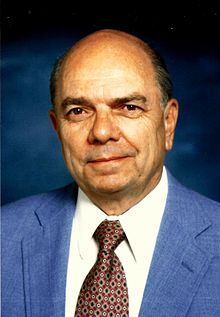
Vale Allen Bergin: Personal Reflections

Allen Bergin, one of the founders of the scientific field of psychotherapy research, died a couple of days ago at the age of 89. In the late 1960’s he and Hans Strupp got a grant to travel around the United States interviewing prominent psychotherapy researchers about where the field should go. The result was the book Changing Frontiers in the Science of Psychotherapy (1972), which I devoured as a grad student when I was at UCLA. I still remember the breathless excitement of their commentary on the process. It was one of the things that inspired me to become a psychotherapy researcher.


Allen had done a post-doc in the early 1960’s with Carl Rogers working on the famous Wisconsin Project, which had applied client-centered therapy (later relabelled as person-centered therapy) to work with clients with psychotic processes. With Sol Garfield, he began editing the Handbook of Psychotherapy and Behavior Change, whose first edition was published in 1971, and which was – and still remains – the standard reference for psychotherapy research.  In the early 1990’s Allen and Sol asked Les Greenberg to do a review of research on humanistic psychotherapies for the fourth edition of the Handbook.  Humanistic psychotherapies had not been covered since the first edition, so this was a big step, and a potentially an important moment for this branch of psychotherapy.  It was also the origin of the Humanistic-Experiential Psychotherapy (HEP) meta-analysis project, still continuing 30 years later. We set to work meta-analyzing pre-post effect sizes for all 37 HEP outcome studies we were able to find. (At that time, we were opposed to comparative outcome research.) Somewhat anxiously, we submitted the draft to Allen and Sol.  They knocked it back, insisting that we analyze the controlled (vs. no-treatment controls) and comparative (vs. other treatments) outcome studies.  We swallowed hard, held our noses, and analyzed the controlled and comparative outcome effects, producing the (for us) startling result of large controlled effects and null (d = 0) comparative effects.  We had obtained a no difference, “dodo bird” effect.  We submitted the revision to Allen and Sol, who knocked it back again, complaining that we had pooled comparative effects involving both CBT and psychodynamic therapies; how did we know that CBT wasn’t more effective that HEPs?  With great trepidation, we ran the comparison between CBT and HEPs; we found CBT to be slightly but nonsignificantly more effective than person-centered, but also tantalizing indications that EFT might more effective than CBT. At that point, much to our relief, Allen and Sol accepted the chapter. 


Years later Allen was visiting Toledo, where his son was teaching in the School of Education at the University of Toledo, and he and I arranged to meet up.  He told me that Sol had wanted to reject our humanistic therapy review chapter from the Handbook; he had insisted on keeping it in the book. Given the precarious state of these therapies in the early 1990’s, I think that the history of the humanistic-experiential therapies would be quite different today if Allen had not come our defense at that point. We owe him a debt of gratitude.


As another testament to his integrity, I want to point to his outspoken advocacy of bringing scientific attention to the important role of religious faith and involvement in religious communities as factors supporting mental health and psychological well-being, published in his ground-breaking paper, “Psychotherapy and religious values.,” in the Journal of Consulting and Clinical Psychology (1980). I remember him presenting a version of this paper at a conference of the Society for Psychotherapy Research around that time. He must have  known that it was not a popular topic with psychotherapy researchers at that point in history, and would possibly lower the estimation that many of his fellow researchers had of him. Nevertheless, it was a testament to his scientific integrity and his religious faith that he went ahead to make his case regardless of the consequences.  As another person of faith, I personally felt validated and inspired by his attempt to combine the spiritual with the scientific. 


Over the past 20 years, various folks in the Society for Psychotherapy Research have reached out to Allen, encouraging him to come to meetings; however, the fact is that he was happy with his mission work (he was a prominent figure in the Church of the Latter Day Saints) and with his family.  Therefore, it was heartening to read the moving account by Michael Barkham (echoed by Wolfgang Lutz and Louis Castonguay) of his recent involvement in the 7th edition of the Handbook (published in 2021). In order to write the preface for it, Michael reports that Allen carefully read and took detailed notes on all 800 pages.


Right now in my imagination I’m picturing him reading the latest version of the HEP chapter in the book he and Sol Garfield founded, pleased and smiling at the nearly 300 outcome studies of HEPs now included in our reviews, feeling glad that he put his faith in us 30 years ago, just when we needed that validation.  Thank you, Allen! Your integrity and faith live on in us.  You are an important piece in the history of psychotherapy research, and one of my personal validating elders (or “angels” or “saints” if you prefer).


For more on Allen Bergin and his life:


https://en.wikipedia.org/wiki/Allen_Bergin


Lambert, M. J., Gurman, A. S., & Richards, P. S. (2010). Allen E. Bergin: Consummate scholar and charter member of the Society for Psychotherapy Research. In L. G. Castonguay, J. C. Muran, L. Angus, J. A. Hayes, N. Ladany, & T. Anderson (Eds.), Bringing psychotherapy research to life: Understanding change through the work of leading clinical researchers (pp. 101–111). American Psychological Association. https://doi.org/10.1037/12137-009